Social Justice
My work at Student Accessibility Services is deeply rooted in social justice because it focuses on equity, access, and advocacy for students with disabilities, who have historically faced systemic barriers in education. In my role, I am helping to ensure that all students, regardless of physical, cognitive, or mental health conditions, have equal opportunities to succeed in an academic environment. I actively advocate for reasonable accommodations such as extended testing time, note-taking support, and accessible learning environments. This work is not just about providing services; it is about upholding students’ rights under laws like the Americans with Disabilities Act (ADA) and creating a more just and equitable system.
As a key component of social justice practice, I help students navigate these processes by empowering them to voice their needs and assert their rights. Additionally, my internship contributes to breaking down stigma surrounding invisible disabilities, including mental health conditions. By fostering understanding and awareness among faculty and students, which is helping to create a campus culture that values diversity and respects different lived experiences.
Overall, my work reflects core social justice principles: promoting the dignity and worth of every individual, advancing human rights, and working toward systemic change. My own perspective, including my experiences with disability, strengthens my ability to connect with and advocate for others in meaningful ways. This aligns with the broader goals of social work by challenging ableism, promoting inclusion, and improving equitable educational environments for everyone on campus.
Internship at :
SUNY Buffalo State University
Student Accessibility Services
Student Accessibility Services (SAS) on campus plays a vital role in promoting equity and inclusion by ensuring that students with disabilities have equal access to academic opportunities and campus life. Grounded in the principles of the Americans with Disabilities Act, SAS works to remove barriers by providing reasonable accommodations such as extended testing time, note-taking support, and accessible classroom environments. As a student intern within this office, I support the mission of advocating for students with disabilities by assisting with intake processes, helping students understand and access their accommodations, and maintaining organized records. I also contribute to creating a welcoming and supportive environment by communicating with students, staff, and faculty, while promoting awareness of disability rights and inclusion across campus.
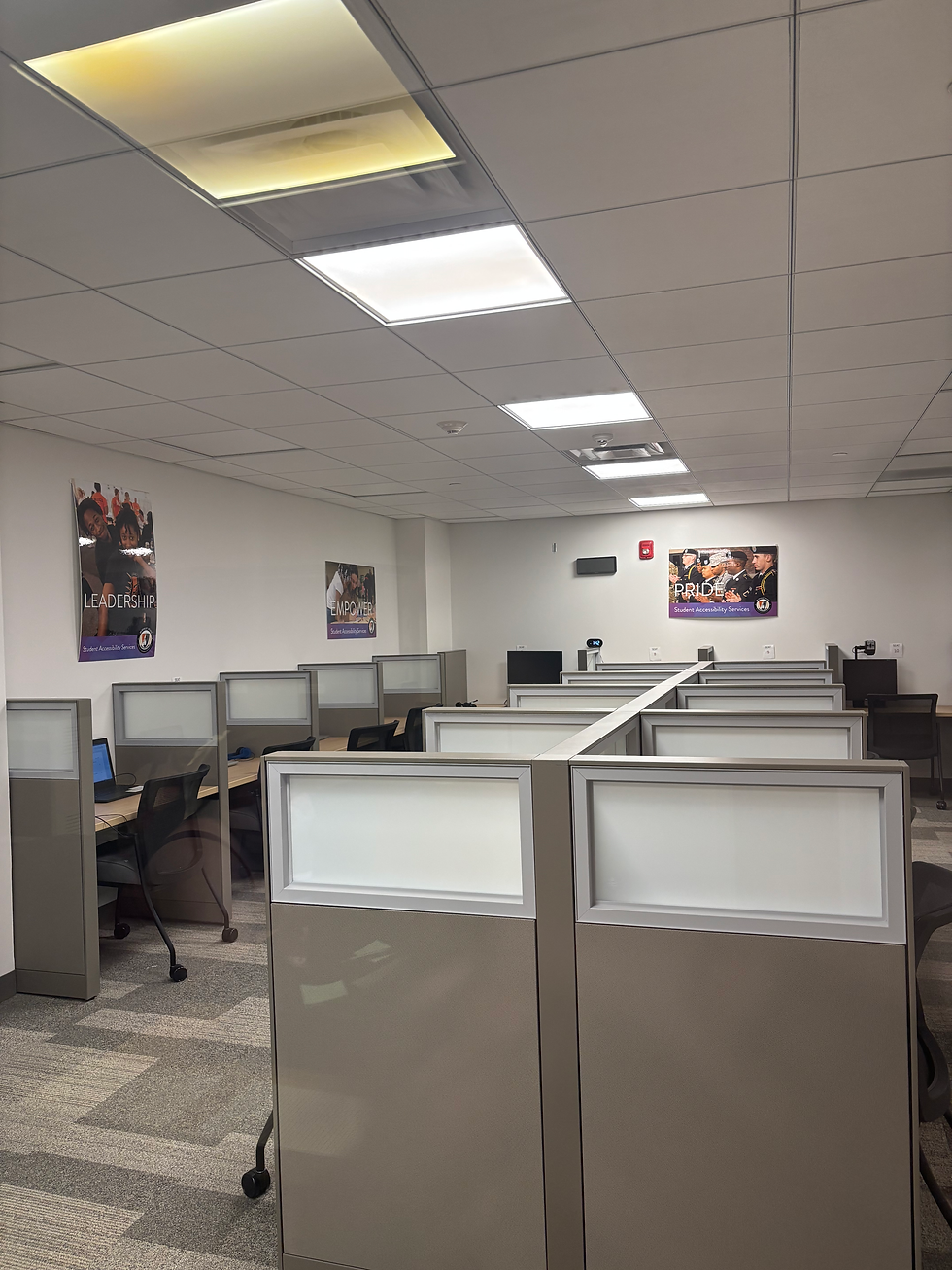
A peaceful place to study, take an exam with reduced distractions, or simply decompress
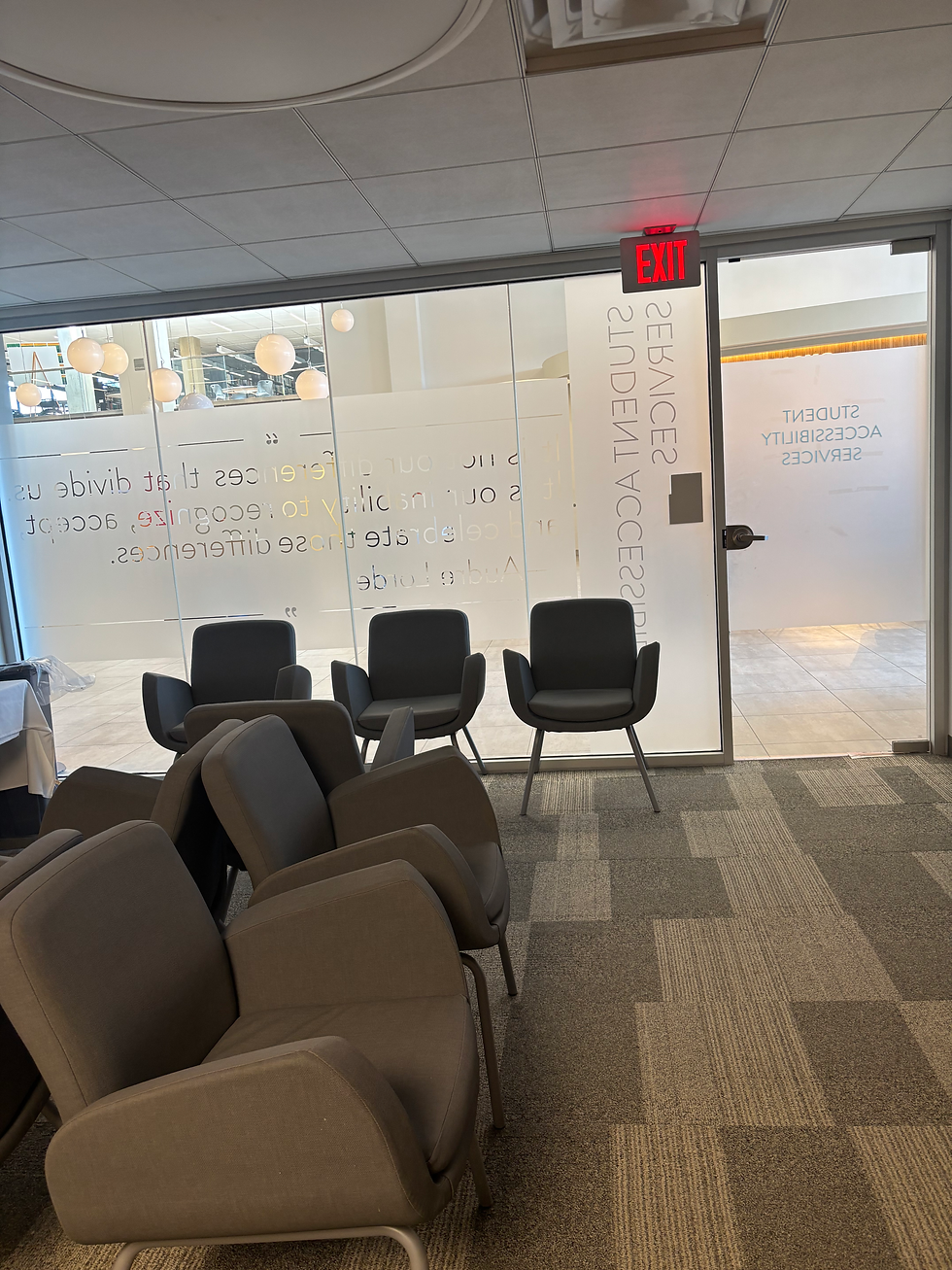
Accomodations
Accommodations are designed for students with disabilities, including physical disabilities, learning disabilities, chronic illnesses, and mental health conditions.
Accommodations are adjustments or supports that remove barriers to learning. These are not advantages, but tools that level the playing field so students can demonstrate their true abilities.
Who
What
Accommodations are implemented across campus; in classrooms, testing centers, residence halls, libraries, and even in online learning environments. Student Accessibility Services acts as the central hub where these supports are coordinated and communicated.
When
Where
Accommodations are important at all times throughout a student’s academic journey, from the moment they enroll to graduation. They are especially critical during high-pressure periods like exams, major assignments, or transitions into new courses or semesters.
Why
Accommodations are essential because they promote equity and uphold students’ rights under the Americans with Disabilities Act. Without them, many students would face unfair disadvantages due to systemic barriers. By providing accommodations, your campus fosters inclusion, supports student success, and ensures that all students have the opportunity to thrive academically and personally.
Academic Accommodations
Note-taking Testing Alternative Format Assistive technology
Additional Accommodations
Housing Service/Assistance Animals Flexible Attendance Accessible Classrooms
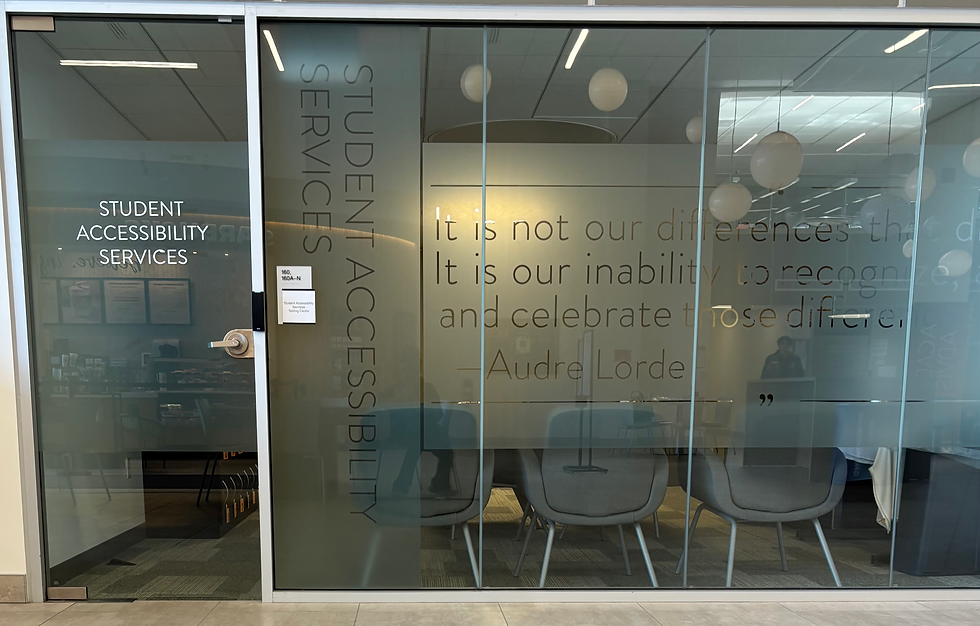
Make appointments through the Accomadate portal
Summary Reflection
My academic experience as a social work student and intern at Student Accessibility Services has been both challenging and rewarding. Navigating campus with a physical disability has not always been easy, especially when it comes to transportation, but I have remained committed to my education by consistently making it to class on time. This determination reflects my resilience and dedication to my goals, showing that despite physical barriers, I continue to push forward and prioritize my academic success.
One of the most significant personal challenges I have faced is being social and stepping outside of my comfort zone. Over time, I have made meaningful progress by engaging more with others, building relationships, and becoming more confident in professional and academic settings. My internship has played a major role in this growth, as it requires communication, collaboration, and active engagement with students and staff. Each interaction has helped me strengthen my interpersonal skills, which are essential in the field of social work.
I have always known that I wanted to help people, and my experience at Student Accessibility Services has allowed me to turn that passion into action. Through my internship, I have had the opportunity to support students from diverse backgrounds who face a wide range of challenges. This has deepened my understanding of empathy, advocacy, and the importance of creating inclusive spaces. Overall, my journey in the social work program and at my internship has shaped me into a more compassionate, resilient, and motivated individual who is prepared to continue making a difference in the lives of others.
I have SAS